Solar Cars: Hype or Hope?

Caroll Alvarado
| 28-04-2026
 · Vehicle Team
You've probably seen the headlines: "Solar-powered cars are here!" The idea is almost magical—imagine driving a car that never needs to stop at a gas station.
Just park it in the sun, and it powers itself. Sounds like the dream, right? But, before you start planning your solar road trip, let's explore it.
Is solar-powered driving truly a game changer, or are we just getting caught up in the hype?
What's the Idea Behind Solar Cars?
At the core of the solar car dream is one simple principle: the sun is a free, abundant, and renewable source of energy. The idea is that solar panels installed on a car's roof or body can capture sunlight and convert it into electricity, powering the car's motor.
The concept has been around for decades, but only recently have engineers started to seriously explore the possibility of making solar-powered cars a mainstream reality.
Free energy
Environmentally friendly
Self-sufficiency
Actionable example:
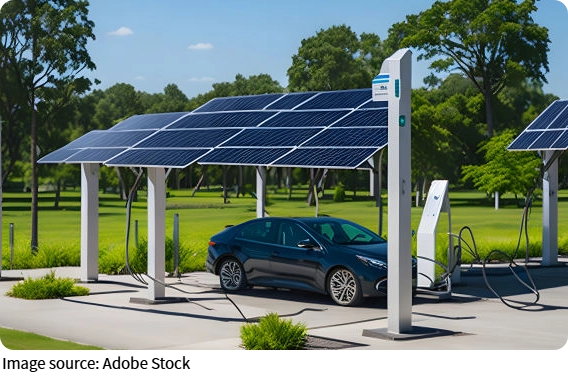
Look into solar-powered charging stations if you have access to one. These stations use solar energy to charge electric cars, which can give you an idea of how solar technology could be integrated into vehicle charging.
The Challenges: Can Solar Panels Power a Car?
Here's where the dream hits a bump. While solar panels work great for small gadgets like calculators or phones, powering an entire car requires a massive amount of energy. Solar panels today aren't efficient enough to generate the kind of power needed for long drives.
Consider this: A typical car consumes around 15–20 kilowatt-hours (kWh) of energy over 100 miles. To generate that amount using solar panels would require a large surface area covered in highly efficient panels—something not currently feasible for an everyday car.
Limited energy output
Size limitations
Energy storage challenges
Actionable example:
If you're considering a solar-powered electric car, keep in mind that while solar panels can help extend range or charge the battery, they aren't a replacement for traditional charging methods. They're best used as a supplementary source.
Are Solar Cars Practical for Daily Use?
For now, solar-powered cars are more about supplementing other power sources than replacing them entirely. Some manufacturers are integrating solar panels to recharge the car's battery during the day, extending the vehicle's range without needing to plug it in.
For example, the Lightyear 0, a solar-powered electric car, includes solar panels on the roof and hood. However, it still relies on traditional charging for longer trips, with solar panels adding a few extra miles to the range each day.
Short-range benefit
Solar energy as a backup
Daily charging needed
Actionable example:
If you're interested in going solar, try hybrid solutions. Some electric vehicles offer solar roof options that help charge the battery during the day. It's a small but smart step toward using renewable energy.
What's Being Done to Improve Solar Car Technology?
Innovation is happening, albeit slowly. Engineers are focusing on:
• Improving solar panel efficiency
• Designing lightweight materials to optimize energy production
• Developing better energy storage systems for overnight charging
The goal is to create a car that can charge itself during the day and keep running without needing an external power source. These developments are still in the prototype stage, but progress is being made.
Solar panel efficiency improvements
Battery technology advancements
Vehicle design optimization
Actionable example:
Keep an eye on solar vehicle competitions, like the World Solar Challenge. These events are where some of the most innovative solutions to solar-powered transportation are tested.
Is Solar Power the Future of Cars?
While solar cars are still in the early stages, the long-term potential is huge. If solar panel efficiency improves and battery storage becomes more reliable, we could see more cars that use solar energy for charging or even driving.
For now, it's clear that solar-powered cars won't replace gas-powered cars or even fully electric vehicles anytime soon. But they can play a vital role in the transition to more sustainable transportation, helping reduce reliance on fossil fuels and providing an eco-friendly option for short trips.
Hybrid solutions
Supplementary energy source
Long-term potential
Actionable example:
Consider adopting more sustainable practices in your own life, like using solar-powered chargers for small devices or exploring local solar energy incentives. The more we support renewable energy, the faster we can see these technologies become viable.
Are solar-powered cars just hype, or are they truly the future? The truth lies somewhere in between. Right now, solar cars face significant challenges, but they're pushing the envelope of what's possible. They may not be fully self-sufficient yet, but the growing interest in solar technology could accelerate breakthroughs in the coming years.
So, while we might not be driving sun-powered cars just yet, the hope is there. The hype isn't empty—it's a sign that we're getting closer to a world where our cars are not only cleaner but also connected to the very environment they drive through.