Plants Are Shifting

Amit Sharma
| 20-08-2026
 · Nature Team
Europe’s high mountains are often seen as some of the clearest places to observe climate change. Temperatures are rising, snow conditions are changing and plant species associated with warmer environments are appearing higher up the slopes.
But new research suggests the story is more complicated than simply “warmer temperatures equal more warmth-loving plants”. A large international study covering 724 permanent monitoring plots on 53 mountain summits found a widespread shift towards species that prefer warmer conditions.
Yet at individual sites, the amount of vegetation change was only weakly connected to how much temperatures had risen there.
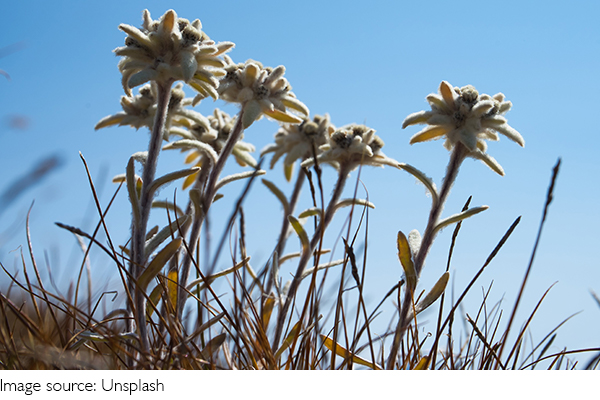
21 Years of Mountain Monitoring
The researchers used data collected through the GLORIA monitoring network, which tracks vegetation on mountain summits across Europe. The plots were surveyed repeatedly over 21 years, giving scientists an unusually detailed picture of how alpine plant communities have changed over time.
The study covered major European mountain regions and compared vegetation records with several different measures of temperature change, including both broader air temperatures and local near-ground conditions.
The overall trend was clear: warmth-associated species have become more common on many summits. This process is known as thermophilization — essentially, a shift in plant communities towards species adapted to warmer environments.
Warmer Summits, but Different Reactions
At first glance, the explanation seems obvious.
Temperatures rise, species from lower and warmer elevations move upward, and cold-adapted alpine communities gradually change.
That pattern does appear when scientists look across entire mountain regions. Areas that experienced stronger warming generally showed a greater shift towards warmth-associated vegetation. But zoom in on an individual summit or monitoring plot and the relationship becomes much less straightforward.
Some sites changed considerably even when measured warming was relatively modest. Others experienced clear temperature increases without an equally dramatic transformation in their plant communities. That means temperature alone cannot explain what happens in every patch of alpine vegetation.
The Plants Nearby Matter
One of the strongest influences turned out to be surprisingly simple: which species were already growing nearby.
A warmer climate may make a summit suitable for a plant from lower elevations, but that species still has to reach the new habitat. If warmth-associated plants are already established close to a monitoring site, they have a much better chance of spreading into it as conditions become favourable.
If those potential colonisers are absent from the surrounding landscape, vegetation may respond much more slowly even when temperatures rise. In other words, climate change may open the door, but plants still need to be standing somewhere close enough to walk through it — figuratively speaking.
Rock, Soil and Terrain Also Shape the Outcome
Mountain summits are extremely varied environments. One monitoring plot might sit on deep soil, another among exposed rocks and scree. Wind exposure, moisture, snow cover, slope direction and disturbance can also differ dramatically over surprisingly short distances. The study found that substrate conditions were another important influence on how rapidly plant communities changed.
A species may theoretically tolerate the warmer temperature of a summit, yet still fail to establish because the ground is unsuitable. This helps explain why neighbouring locations experiencing similar climate trends can develop very different plant communities.
Why Mountain Houseleek Is Interesting
One example is <i>Sempervivum montanum</i>, or mountain houseleek.
The species normally grows in rocky alpine habitats and is relatively well adapted to warm, dry conditions. In recent years, researchers recorded it for the first time on monitored summits in the Mercantour Massif of the French Alps.
Another example is the bearded bellflower, <i>Campanula barbata</i>, a species usually associated with subalpine grasslands. It has increasingly been observed at higher elevations in parts of the Swiss Alps.
These arrivals illustrate the broader shift scientists are detecting, but they also show why change does not happen at the same speed everywhere.
Does This Mean Warming Is Less Important?
No.
The researchers stress that climate change remains the overarching driver behind the long-term transformation.
The apparent contradiction comes from scale.
At one tiny monitoring plot, local factors can dominate. At the scale of an entire mountain range, however, the climate signal becomes much clearer: stronger warming is generally associated with a stronger shift towards warmth-loving vegetation.
So both observations can be true at the same time.
Climate change is reshaping alpine vegetation across Europe, while individual summits respond according to their own combination of plants, terrain and environmental conditions.
Why Long-Term Studies Matter
Alpine ecosystems often change slowly.
Plants need time to disperse, establish themselves and compete with species already occupying a site. Some ecological responses may therefore lag years behind changes in temperature.
That makes long-term monitoring particularly important.
A few unusually hot summers cannot reveal the full direction of an ecosystem. Decades of repeated observations are far more useful for separating short-term variation from lasting biological change.
The researchers argue that continued and expanded monitoring will be essential for predicting what happens to mountain biodiversity in the future.
A More Complicated Mountain Future
The study provides a useful reminder that ecosystems rarely respond to climate change in neat, uniform steps.
Europe’s summits are warming, and warmth-associated plants are undeniably becoming more common. But every mountain has its own starting conditions, neighbouring species and physical barriers.
The broad direction is increasingly clear: alpine vegetation is shifting towards warmer-climate species. What remains much harder to predict is exactly how quickly — and in what form — that transformation will unfold on each individual summit.